Focused arrival windows
Useful updates and clear arrival timing.
When your AC quits in the middle of a Florida summer, you need AC repair Mulberry FL homeowners actually trust. We diagnose the real problem, explain your options in plain language, and fix it the same day whenever possible. From Mulberry to Fort Meade, our licensed techs handle every brand and every breakdown, so you are not sweating through another night.
Useful updates and clear arrival timing.
Review the approach and price before deciding.
Equipped vehicles and respectful cleanup.
Neighbors serving neighbors with follow-through.
Every AC repair call includes a full diagnostic, a written price before work starts, and a test run before we leave. We do not charge extra for the diagnosis if you move forward with the repair. Here is what is included on a standard call, and what we handle as an add-on when the situation calls for it.
We test refrigerant pressures, electrical components, airflow, and thermostat operation. That means manifold gauges on the service ports, a multimeter on the capacitor and contactor, and a temperature split check at the return and supply. You get a clear answer about what failed and why.
You see the price on paper before we pick up a tool. It covers the part, the labor, and any refrigerant if the job needs it. If we find something else while we are in there, we stop and tell you before doing anything. No surprise line items on the invoice.
We stock common capacitors, contactors, thermostats, and blower motors on the truck. Refrigerant is weighed in with a scale, not guessed by pressure alone. If we need a part we do not carry, we tell you the real lead time and schedule the return visit.
If your system is low on refrigerant, we find the leak with an electronic leak detector, repair the copper tubing, pull a deep vacuum with the vacuum pump, and recharge to the manufacturer's spec. Topping off without fixing the leak just delays the same problem.
A clogged condensate line is one of the most common no-cool calls in Florida. We flush the PVC line, check the trap, and test the float switch. If the drain pan is cracked or the line is undersized, we tell you and quote the fix.
We run the system for at least 15 minutes and verify the temperature split is in the 16 to 22 degree range. You see the readings, and we explain what to watch for. If anything looks off, we keep working until it is right.
Share what is happening and receive a clear next step from the local team.
AC repair Mulberry FL is the work of finding out why your system stopped cooling, then fixing the actual cause instead of guessing. That means testing refrigerant charge with manifold gauges, checking the capacitor and contactor, measuring airflow with a duct pressure gauge, and pulling the blower motor if it is drawing high amps. We carry recovery machines and vacuum pumps on every truck so a repair is not delayed waiting on parts. Most jobs are diagnosed in under an hour and finished the same visit.
Mulberry summers push equipment hard. Afternoon heat soaks into attics, and systems that ran fine in April start tripping breakers by July. We see the same failures over and over: dirty air filters choking airflow, clogged condensate drains backing water into the pan, and refrigerant leaks on older R-410A systems. If your AC is not cooling, that is usually one of those three. Call us and we will tell you which one it is before we start charging you anything.
You call (863) 555-0147 and talk to a person, not a phone tree. We ask what your system is doing, how old it is, and whether it is running at all. That tells us what to load on the truck. You get a real arrival window, usually two hours wide, and a text when the tech is on the way.
The tech starts at the thermostat, then moves to the air handler and condenser. We check refrigerant pressures with manifold gauges, test the capacitor and contactor with a multimeter, and measure static pressure across the coil. This takes 30 to 45 minutes and finds the actual failure, not just the symptom.
We show you the failed part, explain what it does, and give you a written price before any work starts. If there is more than one way to fix it, you hear both. No pressure, no scare tactics about your family's health. You decide, and we get to work.
Most repairs take one to three hours. Capacitor and contactor swaps are quick. Refrigerant leaks take longer because we have to find the leak, repair the copper tubing, pull a vacuum with the vacuum pump, and weigh in the exact charge with a refrigerant scale. We clean up when we are done.
Before we leave, we run the system for at least 15 minutes and check the temperature split between return and supply air. You should see 16 to 22 degrees. We show you the readings, change your filter if it needs it, and tell you what to watch for over the next few weeks.

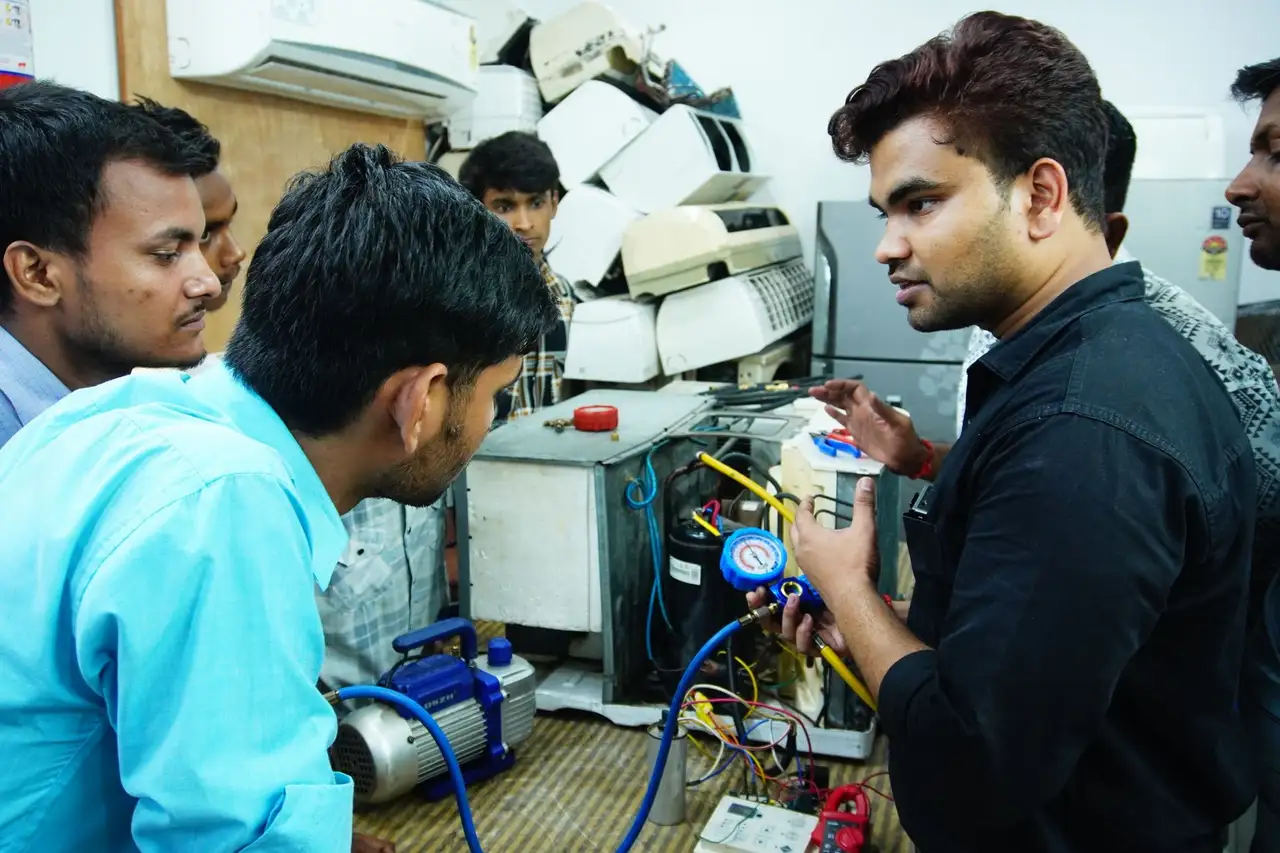
Used to read high-side and low-side refrigerant pressures. The pressure readings tell us whether the system is low on charge, overcharged, or has a restriction in the line.
Sniffs out refrigerant leaks at copper joints, Schrader ports, and coil tubing. Far more accurate than soap bubbles for finding small leaks that would otherwise go unnoticed.
After a leak repair, we pull a deep vacuum to remove moisture and non-condensables, then weigh in the exact refrigerant charge by the ounce. Guessing by pressure alone leads to callbacks.
Tests capacitors, contactors, and motor windings. The clamp meter reads amp draw on the compressor and blower motor, which tells us if a motor is failing before it quits.
Measures static pressure across the coil and ductwork. High static pressure means restricted airflow, which causes frozen coils, high bills, and short compressor life.
Straighten bent condenser fins and clean the coil without damaging it. In Mulberry, coils collect dust and pollen fast, and a dirty coil cuts efficiency by 10 to 20 percent.
We follow Air Conditioning Contractors of America standards for system design, airflow, and commissioning. That means verifying static pressure, temperature split, and charge rather than eyeballing it. It is the difference between a repair that lasts and one that fails in a month.
When a system is oversized or undersized, we run a Manual J load calculation based on square footage, insulation, window orientation, and local climate. That tells us the right tonnage for your home, which matters most when you are deciding between repair and replacement.
Federal law requires EPA 608 certification to handle refrigerant. We recover, recycle, and recharge by the book. That protects the environment and keeps your system's warranty valid, since manufacturers require proper handling for any refrigerant-related claim.
When we replace a component like a coil or condenser, we match it to AHRI-certified combinations so the system performs as designed. Mismatched parts kill efficiency and can void the manufacturer warranty on the whole system.
Call our emergency line. We prioritize no-cool calls, especially with kids, elderly residents, or medical needs in the home. A tech arrives with the common parts on the truck and diagnoses on site. Most emergency calls end with cold air the same night. You pay the same upfront price as a regular call, no after-hours gouging.
That pattern usually means low refrigerant or restricted airflow. We test the charge, check the filter and coil, and find the real cause instead of just adding refrigerant and hoping. You get a fixed system and a bill that drops back to normal. If the issue is a leak, we repair it so you are not paying for refrigerant every season.
That is usually a failing blower motor bearing or a loose blower wheel. We pull the motor, check the windings and the wheel balance, and replace what is worn. Ignoring it can seize the motor and burn out the control board. The noise stops, airflow returns to spec, and you avoid a much bigger repair. Most blower motor swaps finish in two to three hours.
We give you both numbers, repair cost versus replacement cost, plus the efficiency difference and expected lifespan. No pressure either way. If repair makes sense, we do it. If replacement is the better call, we quote that too. You make the decision with real numbers in front of you. Either way, you end up with a system that cools the house and a price you agreed to before work started.
Mulberry sits in the middle of Polk County, and the climate here is brutal on air conditioners. Summer highs push 95 degrees with humidity that makes the heat index hit triple digits, and systems run 12 to 16 hours a day from May through September. That duty cycle wears out capacitors and contactors faster than in drier climates. Homes near the phosphate operations deal with extra dust that clogs filters and coats condenser coils, so we often recommend a 30-day filter change instead of the standard 90. Older block homes in the historic district have ductwork that was sized for a different era, and we frequently find duct leakage that steals 20 to 30 percent of your cooling before it reaches the vents. Newer construction off County Road 640 tends to have tighter envelopes, which changes how we size and commission replacements. If you need affordable AC repair in Mulberry FL, we know what fails here and why, and we fix it with that in mind.
Older block homes with original ductwork that often needs sealing or partial replacement. We see more duct leakage calls here than anywhere else in town.
Mix of older and newer homes with a range of system ages. We keep both R-410A and R-32 refrigerant on hand because we see both here.
Newer construction with tight envelopes and modern systems. Repairs here are usually component failures under warranty rather than duct issues.
Heavy dust loads from nearby operations. Filters clog fast and condenser coils need cleaning more often than the manufacturer schedule suggests.
Systems run 12 to 16 hours a day for five months. That shortens capacitor and contactor life and makes condensate drain clogs a weekly call in summer.
Filters load up in 30 days instead of 90, and condenser coils collect a fine grit that cuts efficiency. We clean coils more often here than in other parts of Polk County.
Lightning strikes and grid surges take out capacitors, control boards, and sometimes compressors. We see a spike in no-cool calls the day after a big storm.
Duct leakage and undersized returns are common. We test static pressure on every diagnostic and flag duct issues that are quietly raising your bill.
A homeowner in Mulberry called on a Friday afternoon with an AC that was humming but not starting. The house was at 86 degrees and climbing. The outdoor unit was hot to the touch and the breaker had tripped twice that week.
We replaced the failed run capacitor and the pitted contactor, tested amp draw on the compressor, and had the system cooling again in under two hours. Temperature split came in at 19 degrees, right in spec. Total cost was $285.
Maintenance: Change the filter every 30 days during summer and have the capacitor tested at each annual tune-up. Capacitors degrade slowly, and a $15 test can catch a failure before it strands you.
A Fort Meade customer had paid two other companies to top off refrigerant three times in 18 months. Each time the system cooled for a few weeks and then warmed up again. Nobody had actually looked for the leak.
We found the leak at a copper joint on the liquid line with an electronic leak detector, repaired the joint, pulled a deep vacuum, and weighed in the correct R-410A charge. The system has held its charge for over a year with no top-offs.
Maintenance: Check refrigerant pressures at your spring tune-up. If the charge is dropping, there is a leak, and topping it off without a repair just delays the same problem.
A Lake Alfred homeowner noticed water in the hall closet where the air handler sits. The pan was overflowing and the float switch had failed to shut the system off. Carpet and baseboard were soaked.
We cleared the clogged PVC condensate line, replaced the failed float switch, and dried out the pan and surrounding area. The system was back to normal in 90 minutes. We also showed the homeowner how to check the drain between service calls.
Maintenance: Pour a cup of vinegar down the condensate drain every month during cooling season. It keeps the algae from building up and prevents the clog that caused this in the first place.
Most no-cool calls come down to a handful of failures. Here are the ones we see most often in Mulberry, what happens if you ignore them, and how we fix them without selling you a system you do not need.
The compressor works harder, the electric bill climbs, and the system can freeze up or trip the breaker. Left alone, it can burn out the compressor, which turns a $300 repair into a $2,000 one. We check refrigerant charge, airflow, and the capacitor first. Low charge means a leak, and we find it with a leak detector, repair the copper, and recharge by weight. Restricted airflow usually means a dirty filter or a clogged evaporator coil, which we clean on site.
A clogged condensate drain backs water into the pan and eventually onto your floor. In a Florida summer, that can mean wet drywall, ruined flooring, and mold inside a week. We flush the PVC condensate line, check the trap and float switch, and verify the pan drains freely. If the line is undersized or the pan is cracked, we quote the replacement. This is a quick fix if you catch it early.
Short cycles wear out the compressor and contactor faster than normal runtime. You also get uneven cooling, with some rooms hot and others cold. The system never reaches setpoint, so it runs almost constantly. Common causes are an oversized system, a failing thermostat, or a refrigerant charge that is off. We test the thermostat calibration, check the charge with manifold gauges, and verify the system is sized right with a Manual J calculation if needed.
That hum is usually the compressor trying to start against a failed capacitor or a locked rotor. If you let it hum, the compressor overheats and eventually fails completely. Shut the system off at the breaker and call us. We test the capacitor and contactor with a clamp meter, check the start relay, and replace what failed. Most of these are back up in under two hours.
$180 - $650 for most repairs; $1,200 - $2,000 for compressor replacement
Typical 2026 pricing for AC repair in Mulberry runs $180 to $650 for most jobs, with compressor replacements landing between $1,200 and $2,000. The diagnostic fee is stated when you book and goes toward the repair if you move forward. We quote the full price before we start, so the number you hear is the number you pay. No after-hours surcharge surprises, no fuel charges, no line items you did not approve. If a repair is not worth the money, we will tell you and quote replacement instead.
You are paying for a diagnosis that finds the real problem, parts that hold up in Florida heat, and a repair that is done to ACCA standards. Cheap repairs that fail in a year cost more than doing it right the first time.
A capacitor runs $15 to $40 in parts. A blower motor runs $150 to $400. A compressor runs $600 to $1,200 before labor. If the part is not on the truck, lead time can add a day or two to the job.
R-410A costs more per pound than it did a few years ago, and R-32 is now showing up on newer systems. A full recharge on a 3-ton system can add $200 to $500 to the bill, depending on how much is needed.
A capacitor swap takes 30 minutes. A leak repair with vacuum and recharge takes three to four hours. Attic air handlers in tight spaces take longer than a garage-mounted unit, and that shows up in the labor line.
On a system over 12 years old, we look hard at whether a repair is worth it. A $400 repair on a system that will need replacement next year is money you will not get back. We tell you that before you spend it.
We do not gouge on after-hours calls, but emergency service does carry a modest premium for the tech on call. Standard business-hours calls are the base rate. We tell you which one applies when you book.

Our techs are NATE certified and hold EPA Section 608 certification for refrigerant handling, which is required by federal law and something you should ask any AC company about. We work on every major brand, Carrier, Trane, Lennox, Goodman, Rheem, York, Mitsubishi Electric, Daikin, Bryant, and American Standard, and we keep up with the shift from R-410A to R-32 refrigerant on newer equipment. We have worked on systems in Mulberry's older block homes and the newer builds off County Road 640, and we know how each one fails differently. That local experience means fewer return trips and faster fixes.
Our AC quit on a Sunday afternoon in July and the house hit 88 degrees by 6 p.m. I called and a tech was here by 8. He found a blown capacitor, had one on the truck, and we had cold air by 9:30. Price was exactly what he quoted on the phone. I have used two other companies in Polk County and neither one answered on a weekend.
We had a refrigerant leak that two other companies kept topping off without fixing. Polk County HVAC found the leak at a copper joint, repaired it, pulled a vacuum, and weighed in the charge. That was last spring and the system is still holding. They cost more than a top-off but I have not paid for refrigerant since.
My mother is 82 and her AC went out in August. I called and told them, and they bumped her to the front of the line. Tech was there in under two hours, replaced a contactor and a thermostat, and showed me the readings before he left. He also cleaned the condensate drain that was about to clog. Fair price, no upsell.
Most AC repairs in Mulberry run $180 to $650 in 2026, depending on the part and how long the job takes. A capacitor or contactor swap sits at the low end. A refrigerant leak repair with recharge lands higher because of the labor and R-410A cost. Compressor replacement is the big-ticket item, often $1,200 to $2,000. We quote the price before we start, so you are never guessing.
We do, and we are local. Polk County HVAC is based in Mulberry and serves the surrounding Polk County area, including Fort Meade, Frostproof, and Lake Alfred. Our techs are NATE certified and EPA 608 certified for refrigerant work. Call (863) 555-0147 and we will get a tech out to you, usually the same day for no-cool calls.
The three most common causes we find are a dirty air filter restricting airflow, a clogged condensate drain triggering the safety switch, and a refrigerant leak on an older system. A failing capacitor or a thermostat malfunction can also stop cooling. If your outdoor unit is running but the air is warm, shut it off and call us. Running a system with low refrigerant can kill the compressor.
Yes. We keep an emergency line open for no-cool calls, including nights and weekends. Emergency air conditioner repair Mulberry FL customers get priority when there is a health risk, infants, elderly residents, or medical equipment in the home. Expect a real arrival window, usually within a few hours, and the same upfront pricing as a regular call.
Not seeing your question? Our local team can help you understand urgency, scheduling and what to expect.
Ask the local team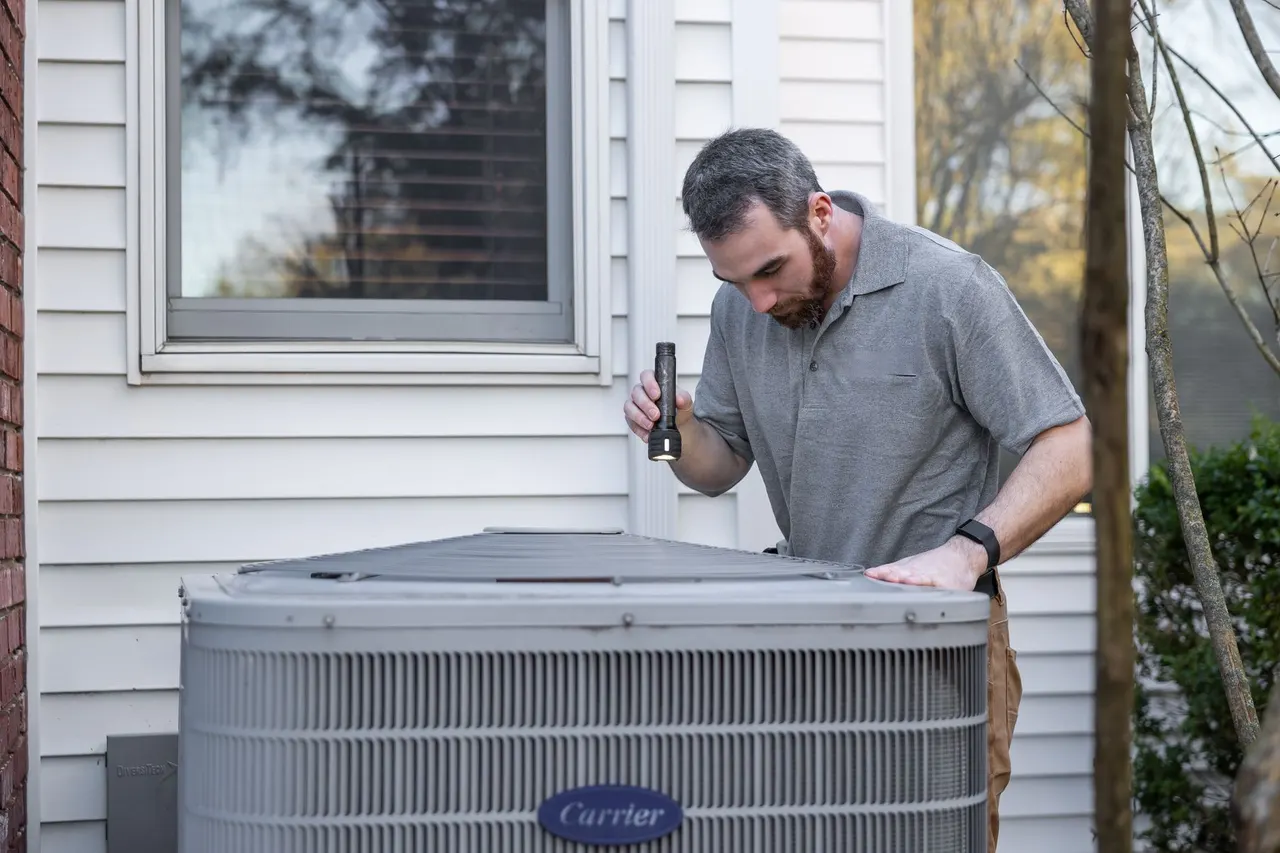
When a repair no longer makes financial sense, we install new systems sized with a Manual J load calculation. We handle the permit, the line set, and the startup so your new unit runs right from day one in Mulberry.
View service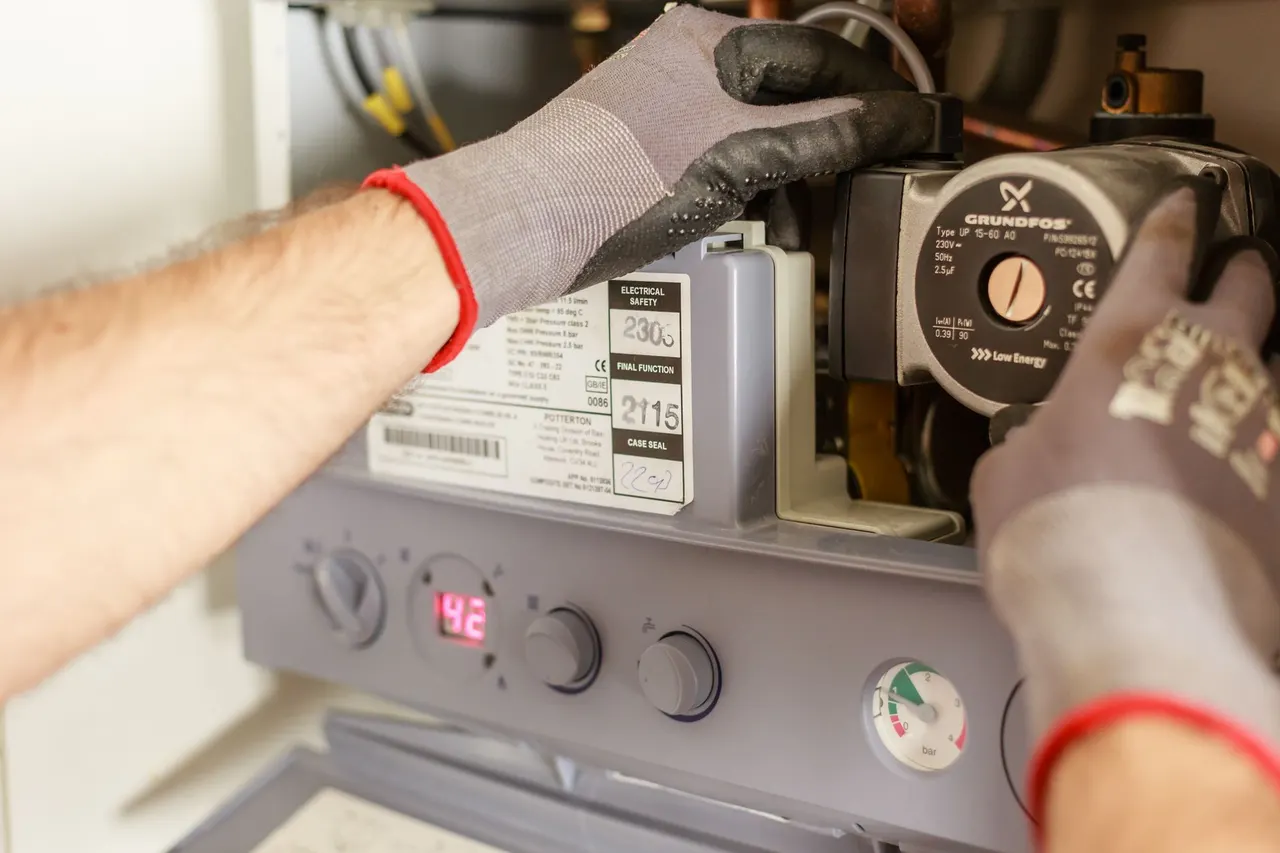
Twice-a-year tune-ups catch the small stuff before it becomes a no-cool call in July. We clean coils, check refrigerant charge, test capacitors, and flush the condensate line. Mulberry customers on a maintenance plan get priority scheduling when something breaks.
View serviceHeat pumps do double duty in Florida, cooling in summer and heating in winter. When yours stops switching modes or blows cold air in January, we diagnose the reversing valve, defrost board, and auxiliary heat strips and get it running again.
View service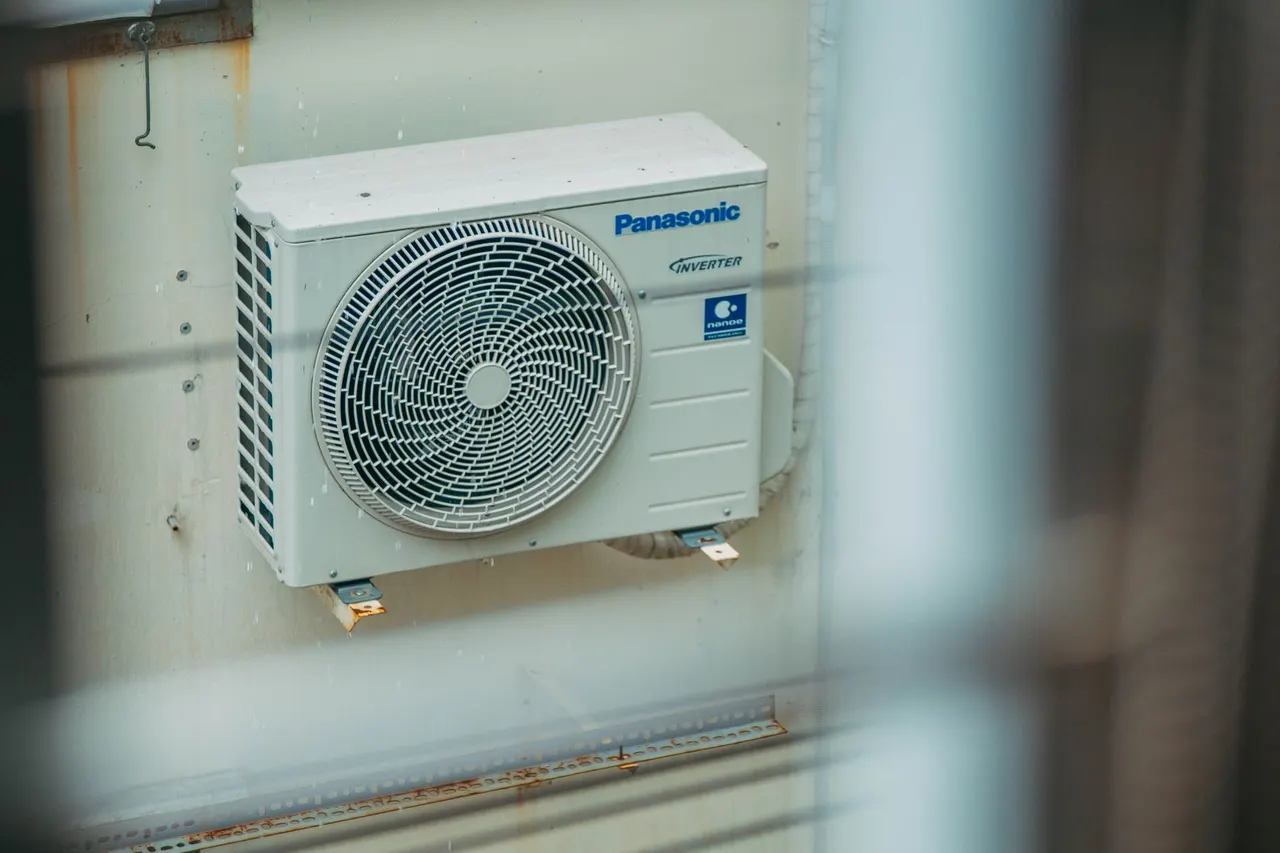
Older heat pumps lose efficiency fast in Florida humidity. We replace them with properly sized units, reuse what we can of the existing ductwork, and verify airflow so you are not paying for capacity you never feel at the vents.
View serviceCall (863) 555-0147 any time - our line is answered 24/7 for emergencies. For non-urgent service, book online and we will confirm a window within the hour. Most Mulberry calls get a same-day slot, and we text you when the tech is on the way.